
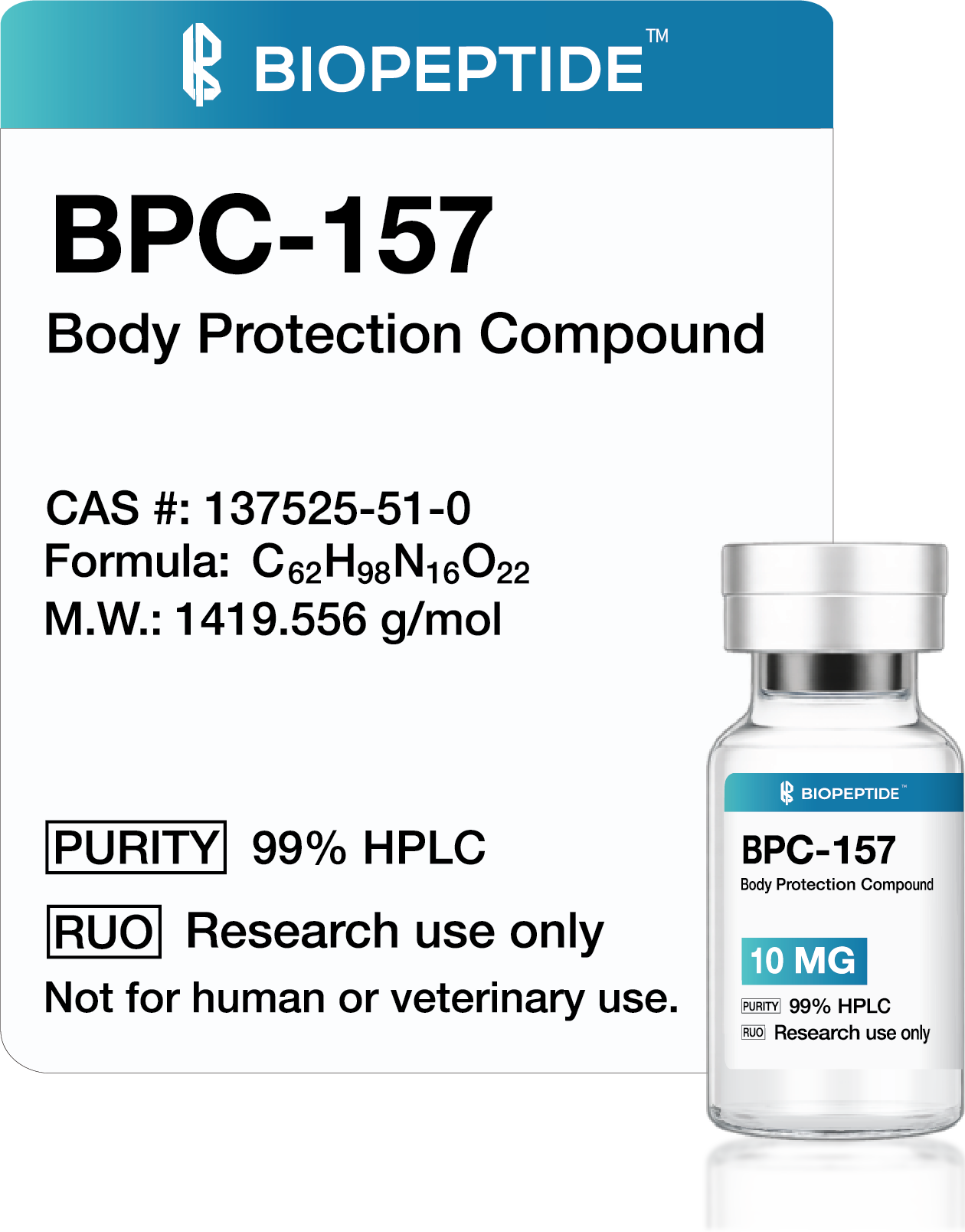
BPC-157 10mg
CAS: 137525-51-0
BPC-157 10mg from BioPeptides is a high-purity synthetic research peptide identified by CAS 137525-51-0. Manufactured using solid-phase peptide synthesis (SPPS) and validated through HPLC and Mass Spectrometry, it is widely studied in cellular signaling, protein expression, and metabolic research models. Known for excellent molecular stability and reproducibility, BPC-157 is trusted by European laboratories seeking reliable compounds when they buy peptides online for controlled scientific investigation.
$260.00
Research Use Only
High-Purity Synthetic Research Peptide Overview
BPC-157 10mg is a premium-grade synthetic research peptide supplied by BioPeptides for advanced in-vitro and laboratory-based scientific investigation.
Each batch is synthesized using Solid-Phase Peptide Synthesis (SPPS) under tightly controlled conditions to ensure molecular precision, purity, and reproducibility.
Identified by CAS number 137525-51-0, this peptide meets the traceability and documentation standards required by European research institutions.
Scientific Background and Research Importance
Synthetic peptides play a foundational role in modern biochemical and biomedical research due to their precision and reproducibility.
BPC-157 is a stable synthetic peptide fragment widely studied for its predictable biochemical behavior and versatility across research models.
Its structural stability and controlled degradation profile make it suitable for complex experimental designs.
European laboratories rely on analytically verified peptides such as BPC-157 to ensure consistency across multi-phase research studies.
Mechanism of Action in Research Contexts
- Modulation of intracellular signaling pathways
- Enhancement of growth factor sensitivity in research models
- Regulation of gene expression patterns
- Influence on mitochondrial ATP production and cellular energy regulation
- Support of enzymatic activation and inhibition pathway analysis
Primary Research Applications
Cellular Repair and Regeneration Studies: Investigating controlled cellular behavior and experimental tissue modeling under laboratory conditions.
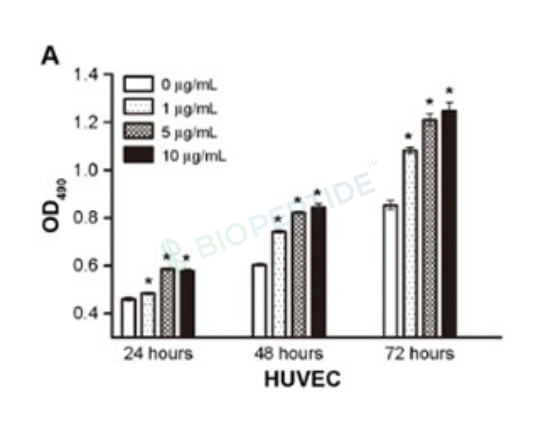
Angiogenesis and Vascular Signaling Research: Studying peptide influence on vascular signaling pathways and cellular communication.
Protein Expression Analysis: Evaluating transcriptional and translational responses in peptide-treated research models.
Receptor-Binding Studies: Analyzing ligand–receptor interactions and peptide-mediated signaling mechanisms.
Mitochondrial Metabolic Research: Assessing peptide effects on cellular energy pathways and ATP production.
Enzymatic Sensitivity and Matrix Remodeling Assays: Exploring enzyme regulation and extracellular structure behavior in controlled environments.
Molecular Characteristics
- Molecular Type: Synthetic pentadecapeptide research compound
- Structure: Linear peptide chain (15 amino acids)
- Stability: High when stored under recommended laboratory conditions
- Molecular Weight: Sequence-dependent
Molecular Stability and Storage Profile
- Supplied as a lyophilized powder for enhanced long-term stability
- Long-term storage: Store at −20°C to preserve molecular integrity
- Sensitive to moisture and prolonged light exposure
- Predictable degradation above room temperature
- Reconstituted solutions remain stable for approximately 24–48 hours under refrigeration
Solubility and Reconstitution Characteristics
- Bacteriostatic water
- Sterile saline
- Acidic buffers
- Compatible analytical-grade organic solvents
Technical Specifications
product Name
BPC-157 10mg
cas
137525-51-0
purity
≥99% (HPLC verified)
unit Size
10 mg vial
form
Lyophilized powder
synthesis
Solid-Phase Peptide Synthesis (SPPS)
analytical
HPLC, Mass Spectrometry, UV Spectrophotometry
molecular Structure
Linear peptide chain
stability
High when stored under recommended conditions
Analytical Validation and Quality Assurance
- High-Performance Liquid Chromatography (HPLC) purity confirmation
- Mass Spectrometry (MS) molecular identity and sequence verification
- UV spectrophotometric concentration analysis
- Batch identity and consistency verification
- Endotoxin and microbial contamination screening
Regulatory and Compliance Statement
BPC-157 10mg is supplied strictly for laboratory research and scientific investigation. It is not approved for use as a drug, food, cosmetic, or medical product, and is not intended for human or animal consumption. BioPeptides provides Certificates of Analysis (COA) and Material Safety Data Sheets (MSDS) upon request to support institutional compliance and internal laboratory documentation.
Frequently Asked Questions
BPC-157 10mg is used in controlled laboratory studies involving cellular signaling, protein expression analysis, receptor-binding assays, and metabolic research models.
The CAS number for BPC-157 is 137525-51-0, which uniquely identifies the compound for research and regulatory reference.
BPC-157 should be stored lyophilized at −20°C, protected from moisture and light, to maintain stability and purity.
Yes. When stored correctly, BPC-157 maintains molecular integrity and reproducibility for extended research timelines.
Common solvents include bacteriostatic water, sterile saline, acidic buffers, and selected analytical-grade organic solvents.
No. BPC-157 is strictly supplied for laboratory research use only and is not approved for medical, cosmetic, or dietary applications.