

Hexarelin 5mg ×10 + MOD-GRF (1-29) 5mg ×10 (Bundle)
CAS: Hexarelin: 140703-51-1 | MOD-GRF (1-29): 86168-78-7
This dual-peptide research bundle combines Hexarelin, a potent growth hormone secretagogue studied for ghrelin receptor activation, with MOD-GRF (1-29), a modified growth hormone–releasing hormone analog investigated for pituitary receptor stimulation. Together these peptides are widely used in laboratory research examining growth hormone release mechanisms, endocrine pathway coordination, and receptor-mediated signaling within the hypothalamic–pituitary axis.
$980.00
Research Use Only
Research Overview
This research bundle combines Hexarelin and MOD-GRF (1-29), two peptides widely studied for their role in growth hormone signaling research.
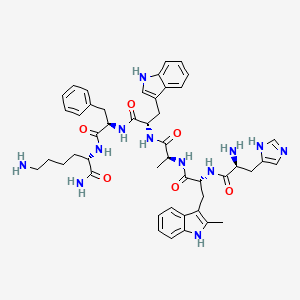
Hexarelin interacts with the growth hormone secretagogue receptor (GHS-R), also known as the ghrelin receptor.
MOD-GRF (1-29) stimulates pituitary receptors responsible for growth hormone release.
Studying these peptides together allows researchers to investigate synergistic endocrine signaling across the hypothalamic–pituitary axis.
Scientific Background
Growth hormone secretion is regulated through complex interactions between hypothalamic and pituitary signaling pathways.
GHRH analogs such as MOD-GRF activate receptors at the pituitary gland responsible for GH release.
Growth hormone secretagogues such as Hexarelin activate ghrelin-mediated signaling pathways.
Combining both peptides allows researchers to investigate receptor cross-talk, signal amplification, and endocrine pathway coordination.
Mechanistic Research Perspective
- Growth hormone secretagogue receptor activation studies
- GHRH receptor signaling pathway investigation
- Hypothalamic–pituitary endocrine signaling analysis
- Hormonal secretion timing and pathway coordination research
- Ligand–receptor interaction modeling
Primary Research Applications
Growth Hormone Release Pathway Research: Researchers study the mechanisms responsible for growth hormone secretion through combined ghrelin receptor and GHRH receptor activation.
Hypothalamic–Pituitary Axis Studies: The peptide bundle supports investigations into endocrine coordination between hypothalamic signaling and pituitary hormone release.
Peptide–Receptor Interaction Research: Scientists examine receptor binding, ligand affinity, and signaling dynamics associated with endocrine peptide pathways.
Endocrine Signaling Coordination Studies: The combination enables analysis of how multiple hormonal signaling pathways interact within endocrine regulatory systems.
Cellular & Molecular Biology Research: Laboratories apply these peptides in cell-based assays to investigate downstream signaling cascades and molecular pathway responses.
Molecular Characteristics
- Peptide 1: Hexarelin (Growth hormone secretagogue)
- CAS Number: 140703-51-1
- Molecular Weight: ~887 g/mol
- Peptide 2: MOD-GRF (1-29) no DAC (Modified GHRH analog)
- CAS Number: 86168-78-7
- Molecular Weight: ~3357 g/mol
- Form: Lyophilized peptide powders
- Purity: ≥99% HPLC verified
Stability Profile and Storage Recommendations
- Store lyophilized peptide vials at −20°C
- Protect from moisture and direct light exposure
- Avoid repeated freeze–thaw cycles
- Reconstituted solutions should be refrigerated
- Handle using aseptic laboratory techniques
Solubility and Reconstitution Options
- Sterile bacteriostatic water
- Sterile saline solutions
- Buffered aqueous laboratory solutions
- Biochemical assay buffers
- Laboratory-grade solvent systems
Technical Specifications
product Name
Hexarelin + MOD-GRF (1-29) Research Bundle
brand
BioPeptides
hexarelin C A S
140703-51-1
mod G R F C A S
86168-78-7
purity
≥99% (HPLC verified)
unit Size
5mg ×10 vials each peptide
form
Lyophilized powders
synthesis
Solid-Phase Peptide Synthesis (SPPS)
analytical
HPLC and Mass Spectrometry
molecular Structure
Synthetic endocrine research peptides
stability
High when stored at −20°C
Analytical Validation and Quality Assurance
- High-performance liquid chromatography purity verification
- Mass spectrometry molecular weight confirmation
- Peptide structural integrity testing
- Batch-to-batch analytical consistency validation
- Peptide stability verification for research use
Regulatory and Compliance Statement
Hexarelin and MOD-GRF (1-29) supplied by BioPeptides are intended strictly for laboratory and scientific research use only. These materials are not approved for human consumption, veterinary use, cosmetic applications, or therapeutic treatments. Buyers must ensure compliance with applicable research regulations and institutional policies.
Frequently Asked Questions
The larger 5mg ×10 vial configuration supports long-term research workflows and allows scientists to conduct extended experiments without frequent reordering.
Hexarelin activates ghrelin receptors while MOD-GRF stimulates GHRH receptors, enabling researchers to study coordinated growth hormone signaling through two complementary pathways.
Yes. The bundle is widely used in controlled in-vitro experiments analyzing receptor binding, endocrine signaling pathways, and cellular response mechanisms.
CAS numbers ensure accurate compound identification, traceability, and reproducibility across laboratory documentation.
Lyophilized vials should be stored at −20°C and protected from moisture and repeated freeze-thaw cycles.
BioPeptides provides high-purity synthesis, verified CAS documentation, professional laboratory packaging, and reliable logistics for research institutions.