
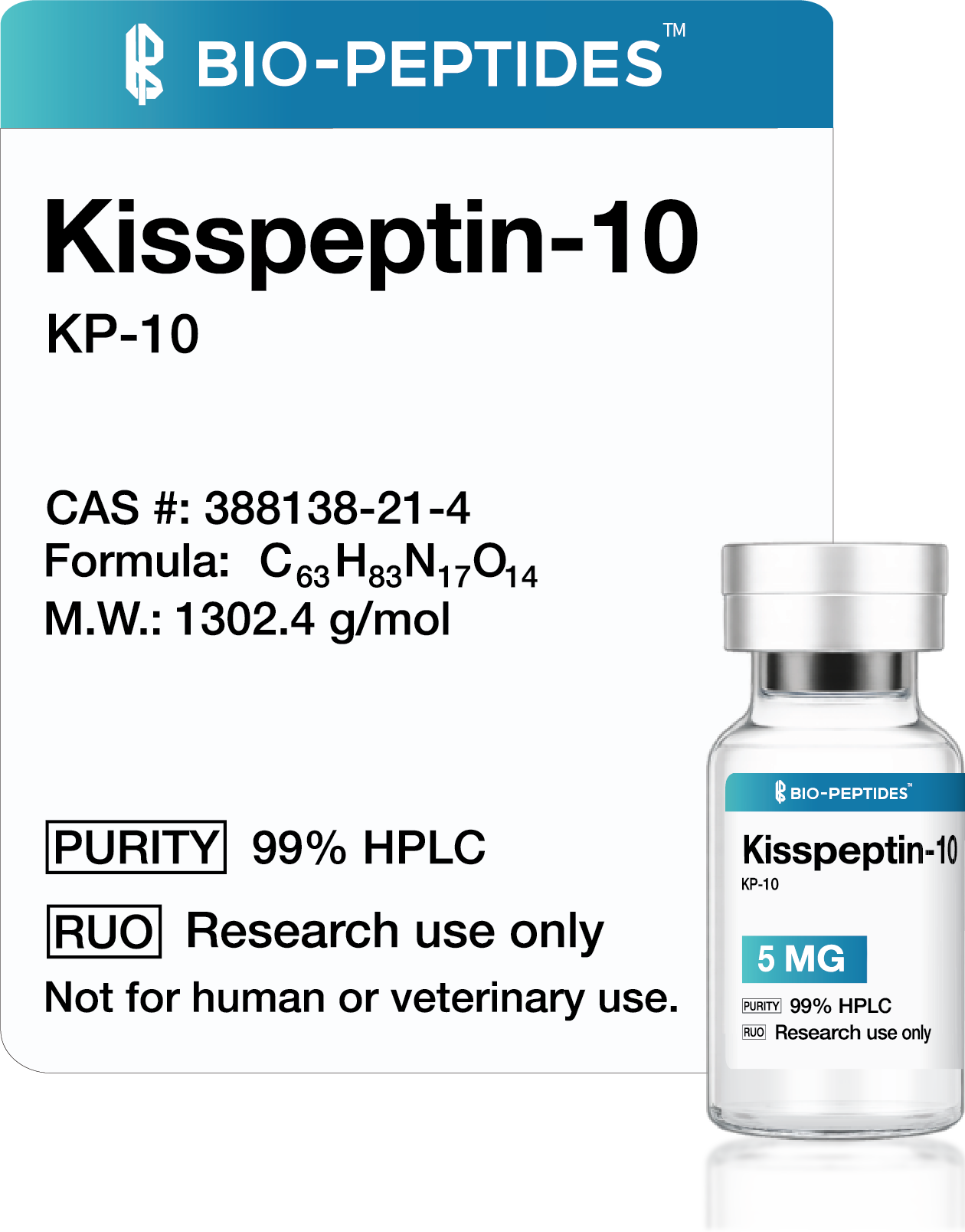
Kisspeptin-10 5mg
CAS: 36507-37-0
Kisspeptin-10 5mg by BioPeptide is a high-purity, research-grade neuropeptide developed for advanced laboratory studies in reproductive hormone signaling, hypothalamic-pituitary-gonadal (HPG) axis research, and receptor-mediated endocrine regulation. Synthesized using precision solid-phase peptide synthesis and purified to ≥99% HPLC, this peptide delivers excellent molecular accuracy and reproducibility. Identified by CAS 36507-37-0, Kisspeptin-10 is widely used in controlled in-vitro and biochemical research models across Europe and the United States. BioPeptide provides secure access to premium re
$165.00
Research Use Only
Research Overview
Kisspeptin-10 is a short peptide fragment derived from the Kisspeptin precursor protein family.
It is widely studied for its ability to activate signaling pathways associated with gonadotropin-releasing hormone (GnRH) regulation.
In laboratory research models Kisspeptin-10 supports investigation of neuroendocrine communication between the hypothalamus and pituitary gland.
The 5mg research format is suitable for extended laboratory studies and receptor-binding experiments.
Scientific Background
The hypothalamic-pituitary-gonadal (HPG) axis plays a central role in reproductive hormone regulation.
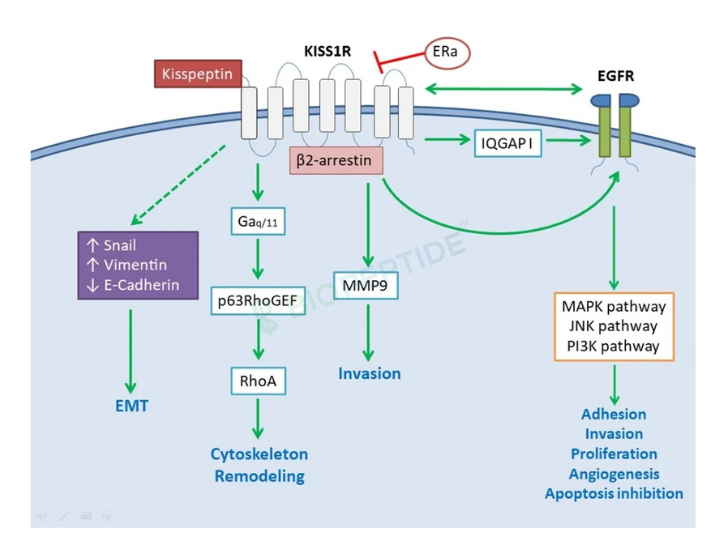
Kisspeptin peptides act as signaling molecules that stimulate GnRH-secreting neurons within the hypothalamus.
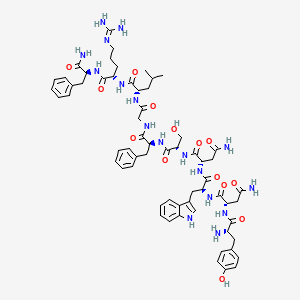
Kisspeptin-10 represents the minimal peptide fragment capable of maintaining strong receptor activation.
Because of this property, it is frequently used in neuroendocrine research exploring reproductive hormone regulation.
Mechanistic Research Perspective
- GnRH neuron activation research
- HPG axis signaling pathway investigation
- Neuropeptide receptor interaction studies
- Hypothalamic signaling pathway modeling
- Hormonal feedback mechanism analysis
Primary Research Applications
Reproductive Hormone Signaling Studies: Kisspeptin-10 is widely used to investigate GnRH activation and downstream gonadotropin signaling mechanisms.
Neuroendocrine System Research: Researchers use Kisspeptin-10 to explore hypothalamic signaling networks and endocrine communication pathways.
Receptor-Binding Investigations: The peptide is used in receptor-binding assays to study peptide-receptor interaction and signaling specificity.
Cellular & Molecular Biology Research: Laboratories incorporate Kisspeptin-10 in cell-based models to examine transcriptional responses and intracellular signaling cascades.
In-Vitro Research Models: Kisspeptin-10 is frequently used in controlled in-vitro research exploring neuroendocrine signaling mechanisms.
Molecular Characteristics
- Compound Name: Kisspeptin-10
- CAS Number: 36507-37-0
- Peptide Length: 10 amino acids
- Molecular Formula: C63H83N17O14
- Molecular Weight: ~1302 g/mol
- Form: Lyophilized peptide powder
- Purity: ≥99% HPLC verified
Stability Profile and Storage Recommendations
- Store lyophilized peptide at −20°C
- Protect from moisture and light exposure
- Avoid repeated freeze-thaw cycles
- Reconstituted solutions should be refrigerated
- Handle using sterile laboratory techniques
Solubility and Reconstitution Options
- Sterile bacteriostatic water
- Sterile saline solution
- Buffered aqueous laboratory solutions
- Biochemical assay buffers
- Laboratory-grade solvent systems
Technical Specifications
product Name
Kisspeptin-10 5mg
brand
BioPeptide
cas
36507-37-0
purity
≥99% (HPLC verified)
unit Size
5mg vial
form
Lyophilized powder
synthesis
Solid-Phase Peptide Synthesis (SPPS)
analytical
HPLC and Mass Spectrometry
molecular Structure
Decapeptide neuroendocrine signaling peptide
stability
Stable when stored at −20°C
Analytical Validation and Quality Assurance
- High-performance liquid chromatography purity verification
- Mass spectrometry molecular weight confirmation
- Peptide structural integrity validation
- Batch-to-batch analytical consistency testing
- Peptide stability verification
Regulatory and Compliance Statement
Kisspeptin-10 supplied by BioPeptide is intended strictly for laboratory and scientific research use only. It is not approved for human consumption, veterinary use, cosmetic applications, or therapeutic treatments.
Frequently Asked Questions
Kisspeptin-10 is primarily used to study neuroendocrine signaling, particularly GnRH activation and reproductive hormone regulation in controlled laboratory models.
Kisspeptin-10 is a shorter active fragment that retains strong receptor-binding activity while offering simpler structural characteristics for research experiments.
The CAS number ensures precise chemical identification and traceability across laboratory documentation and scientific studies.
Yes. Kisspeptin-10 is widely used in in-vitro models studying receptor signaling and neuroendocrine pathway activation.
Kisspeptin-10 is commonly studied in neuroendocrinology, reproductive biology, molecular signaling research, and hormone pathway analysis.
The 5mg format provides flexibility for experimental protocols while minimizing peptide waste in laboratory studies.
Lyophilized Kisspeptin-10 should be stored at −20°C and protected from repeated freeze-thaw cycles.
BioPeptide provides high-purity peptides with verified CAS documentation and reliable shipping for research institutions.