

MOD-GRF (1-29) + Ipamorelin + GHRP-2 Blend
CAS: 863288-34-0 / 170851-70-4 / 158861-67-7
MOD-GRF (1-29) + Ipamorelin + GHRP-2 Blend by BioPeptides is a high-purity research-grade peptide combination formulated for advanced laboratory studies of growth hormone signaling, receptor pathway dynamics, and endocrine signaling interactions. Synthesized using precision solid-phase peptide synthesis and purified to ≥99% HPLC, this blend offers excellent molecular stability and reproducibility. Identified by CAS 863288-34-0 (MOD-GRF 1-29), CAS 170851-70-4 (Ipamorelin), and CAS 158861-67-7 (GHRP-2), it is widely used in controlled in-vitro research across Europe and the United States.
$235.00
Research Use Only
Research Overview
MOD-GRF (1-29) + Ipamorelin + GHRP-2 is a triple-peptide blend used in advanced growth hormone axis research.
Researchers study this formulation to analyze coordinated activation of GHRH and ghrelin receptor signaling pathways.
The blend provides a model for investigating synergistic endocrine signaling mechanisms.
The formulation supports controlled laboratory experiments exploring multi-receptor signaling dynamics.
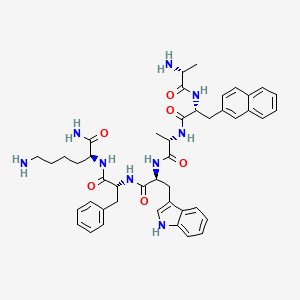
Scientific Background
MOD-GRF (1-29) is a modified fragment of growth hormone-releasing hormone engineered for improved stability and receptor interaction.
Ipamorelin is a selective ghrelin receptor agonist studied for its targeted growth hormone signaling activity.
GHRP-2 is a synthetic peptide that activates the ghrelin receptor and supports research on growth hormone secretion pathways.
Together, these peptides allow researchers to investigate coordinated receptor activation and endocrine signaling interactions.
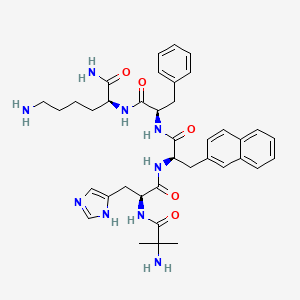
Mechanistic Research Perspective
- GHRH receptor activation research
- Ghrelin receptor (GHS-R) signaling pathway analysis
- Multi-pathway growth hormone axis activation models
- Receptor synergy and cross-talk investigation
- Peptide-mediated endocrine signaling research
Primary Research Applications
Growth Hormone Axis Research: The blend is used to investigate coordinated activation of growth hormone signaling pathways in laboratory research models.
Receptor Cross-Talk Studies: Researchers analyze interactions between GHRH receptors and ghrelin receptors using this multi-peptide system.
Pulsatile Endocrine Signaling Models: The peptide combination supports experiments examining temporal dynamics of endocrine signaling.
Cellular & Molecular Biology Research: Laboratories incorporate the blend into cell-based assays to analyze downstream transcriptional and signaling responses.
Comparative Endocrine Pathway Research: The blend enables comparison between single-receptor activation and combined multi-pathway signaling effects.
Molecular Characteristics
- Compound Name: MOD-GRF (1-29) + Ipamorelin + GHRP-2 Blend
- CAS Numbers: 863288-34-0, 170851-70-4, 158861-67-7
- Peptide Class: GHRH analog + GHS-R agonist peptide blend
- Form: Lyophilized peptide powder blend
- Purity: ≥99% HPLC verified
- Unit Size: Research peptide blend format
Stability Profile and Storage Recommendations
- Store lyophilized peptides at −20°C
- Protect from moisture and light exposure
- Avoid repeated freeze–thaw cycles
- Reconstitute using sterile laboratory-grade solvent
- Seal vial tightly after use
Solubility and Preparation Considerations
- Soluble in sterile bacteriostatic water
- Compatible with buffered aqueous laboratory solutions
- Suitable for peptide research protocols
- Applicable in receptor signaling assay preparations
- Compatible with cell culture experimental models
Technical Specifications
product Name
MOD-GRF (1-29) + Ipamorelin + GHRP-2 Blend
brand
BioPeptides
cas
863288-34-0 / 170851-70-4 / 158861-67-7
purity
≥99% (HPLC verified)
form
Lyophilized peptide powder blend
synthesis
Solid-phase peptide synthesis (SPPS)
analytical
HPLC and mass spectrometry verification
molecular Structure
Triple peptide blend targeting GH-axis signaling
stability
Stable under −20°C storage conditions
Analytical Validation and Quality Assurance
- High-resolution HPLC purity testing
- Peptide identity verification
- Structural integrity analysis
- Batch-to-batch consistency validation
- Peptide stability testing
Regulatory and Compliance Statement
MOD-GRF (1-29) + Ipamorelin + GHRP-2 supplied by BioPeptides is intended strictly for laboratory research use only. It is not approved for human consumption, veterinary use, therapeutic applications, or medical treatments.
Frequently Asked Questions
The blend is primarily studied for growth hormone axis signaling, receptor synergy, and endocrine pathway interactions in controlled laboratory research models.
MOD-GRF activates the GHRH receptor, while Ipamorelin and GHRP-2 stimulate the ghrelin receptor, enabling investigation of multi-pathway endocrine signaling.
CAS numbers uniquely identify each peptide, ensuring accurate documentation, traceability, and reproducibility across research laboratories.
Yes. The blend is commonly used in receptor assays, signaling pathway experiments, and endocrine research models.
It is widely used in endocrinology research, molecular biology, receptor pharmacology, and peptide signaling studies.
A blend allows simultaneous pathway activation, reduces experimental variability, and improves research efficiency.
The peptides should be stored at −20°C in lyophilized form and protected from moisture and light.
BioPeptides provides high-purity peptides with verified CAS documentation and reliable international supply for research laboratories.