
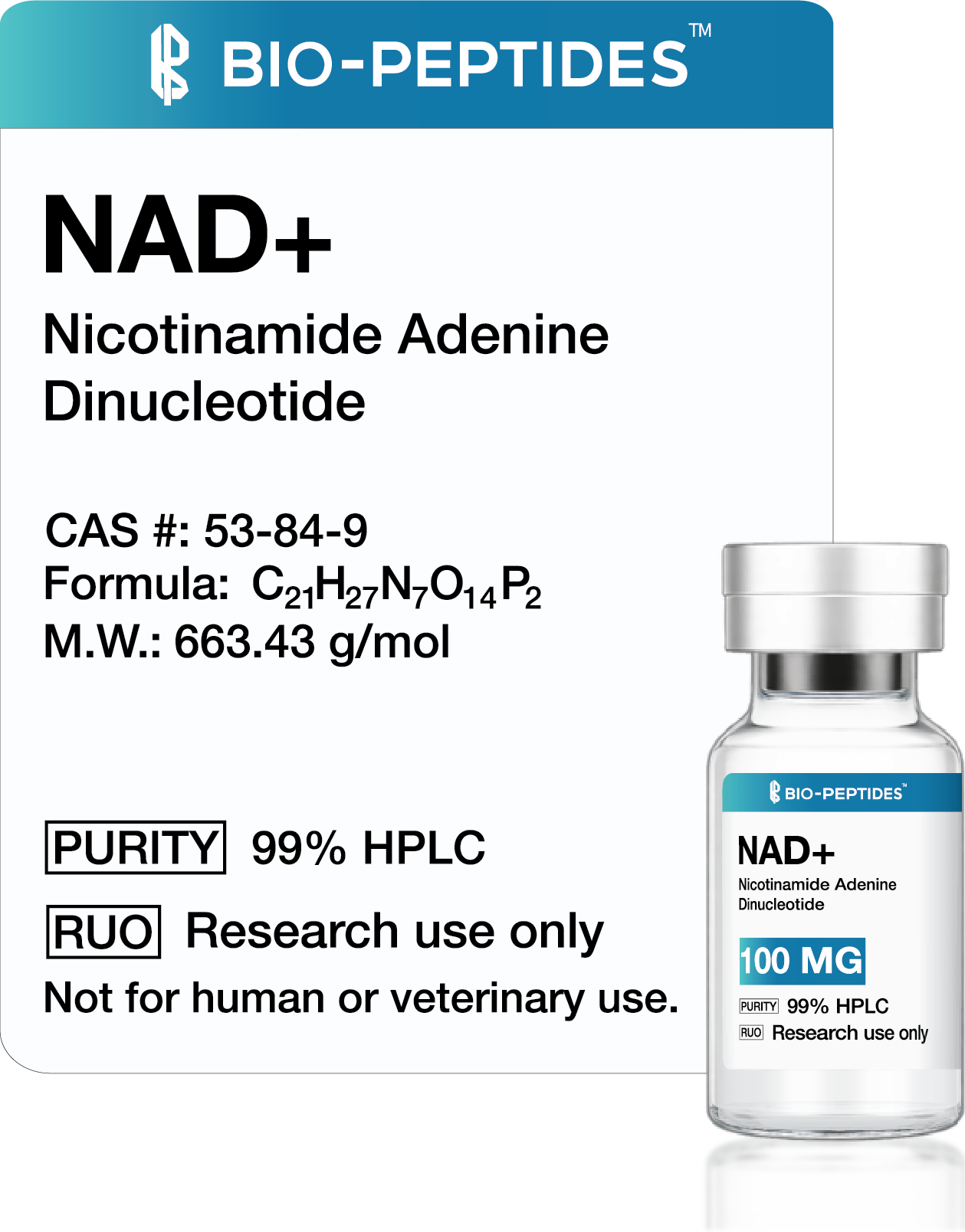
NAD⁺ (β-Nicotinamide Adenine Dinucleotide) 100mg
CAS: 53-84-9
NAD⁺ (Nicotinamide Adenine Dinucleotide) 100mg by BioPeptides is a high-purity research-grade biochemical cofactor developed for advanced laboratory studies involving cellular metabolism, redox biology, and mitochondrial bioenergetics. Produced under strict analytical quality standards, this compound provides reliable consistency for biochemical assays and metabolic pathway investigations. Identified by CAS 53-84-9, NAD⁺ is widely used in controlled in-vitro research across Europe and the United States.
$320.00
Research Use Only
Research Overview
NAD⁺ is a naturally occurring dinucleotide coenzyme used in laboratory research investigating cellular metabolism and redox reactions.
Researchers study NAD⁺ to understand biochemical energy pathways including glycolysis, the citric acid cycle, and mitochondrial respiration.
The compound acts as a critical electron carrier in oxidation–reduction reactions across numerous cellular processes.
NAD⁺ research contributes to broader investigations in metabolic regulation, mitochondrial biology, and enzymatic signaling.
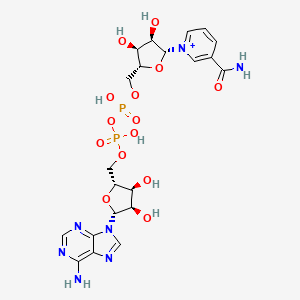
Scientific Background
NAD⁺ (Nicotinamide Adenine Dinucleotide) is a coenzyme found in all living cells and is essential for redox reactions.
It cycles between oxidized (NAD⁺) and reduced (NADH) forms during metabolic reactions.
Researchers study NAD⁺ for its involvement in mitochondrial bioenergetics, enzyme-dependent signaling pathways, and cellular stress responses.
The molecule is also required by multiple enzyme families including sirtuins and PARP enzymes.
Mechanistic Research Perspective
- Redox reaction and electron-transfer research
- Cellular energy metabolism studies
- Mitochondrial bioenergetics investigation
- Enzyme-dependent signaling pathway research
- Oxidative stress and metabolic regulation analysis
Primary Research Applications
Cellular Metabolism Research: Researchers use NAD⁺ to study metabolic pathways involved in ATP generation and cellular energy balance.
Redox Biology Studies: The compound is applied in experiments analyzing oxidation–reduction reactions and oxidative stress mechanisms.
Mitochondrial Function Analysis: Scientists investigate mitochondrial respiration and electron transport chain activity using NAD⁺ in biochemical assays.
Enzyme & Cofactor Research: NAD⁺ serves as a cofactor in studies examining enzyme kinetics and biochemical signaling pathways.
Biochemical & Molecular Biology Research: Widely used in laboratory models analyzing metabolic regulation and cellular signaling networks.
Molecular Characteristics
- Compound Name: NAD⁺ (Nicotinamide Adenine Dinucleotide)
- CAS Number: 53-84-9
- Chemical Class: Dinucleotide coenzyme
- Form: Crystalline powder
- Purity: Research-grade analytical standard
- Unit Size: 100 mg laboratory research format
Stability Profile and Storage Recommendations
- Store in a cool, dry environment
- Protect from moisture and direct light
- Avoid repeated exposure to air or humidity
- Seal container tightly after use
- Use standard laboratory storage procedures
Solubility and Preparation Considerations
- Water soluble biochemical compound
- Compatible with buffered aqueous solutions
- Suitable for biochemical assay preparation
- Applicable in metabolic pathway experiments
- Compatible with enzyme-dependent research systems
Technical Specifications
product Name
NAD⁺ 100mg
brand
BioPeptides
cas
53-84-9
purity
Research-grade analytical purity
form
Crystalline powder
synthesis
Controlled biochemical synthesis
analytical
Identity and purity verification
molecular Structure
Dinucleotide metabolic coenzyme
stability
Stable under recommended laboratory storage conditions
Analytical Validation and Quality Assurance
- Chemical identity verification
- Purity and stability assessment
- Batch-to-batch consistency validation
- Packaging integrity inspection
- Analytical quality control testing
Regulatory and Compliance Statement
NAD⁺ supplied by BioPeptides is intended strictly for laboratory research use only. It is not approved for human consumption, veterinary use, therapeutic applications, or medical treatments.
Frequently Asked Questions
NAD⁺ is widely used in laboratory research investigating cellular metabolism, mitochondrial function, redox biology, and enzyme-dependent biochemical pathways.
NAD⁺ functions as an electron carrier in metabolic reactions, making it essential for studying energy production and redox balance.
CAS 53-84-9 uniquely identifies Nicotinamide Adenine Dinucleotide (NAD⁺), ensuring accurate chemical documentation and traceability.
Yes. NAD⁺ is commonly used in biochemical assays, enzyme kinetics experiments, and metabolic pathway research.
It is widely used in biochemistry, metabolic research, mitochondrial biology, molecular biology, and cellular signaling studies.
The 100mg format supports extended laboratory experiments, multiple assays, and improved cost efficiency for research laboratories.
It should be stored in a cool, dry place protected from light and moisture and handled using standard laboratory procedures.
BioPeptides provides verified research-grade materials with documented CAS identification, consistent quality, and reliable international supply.