
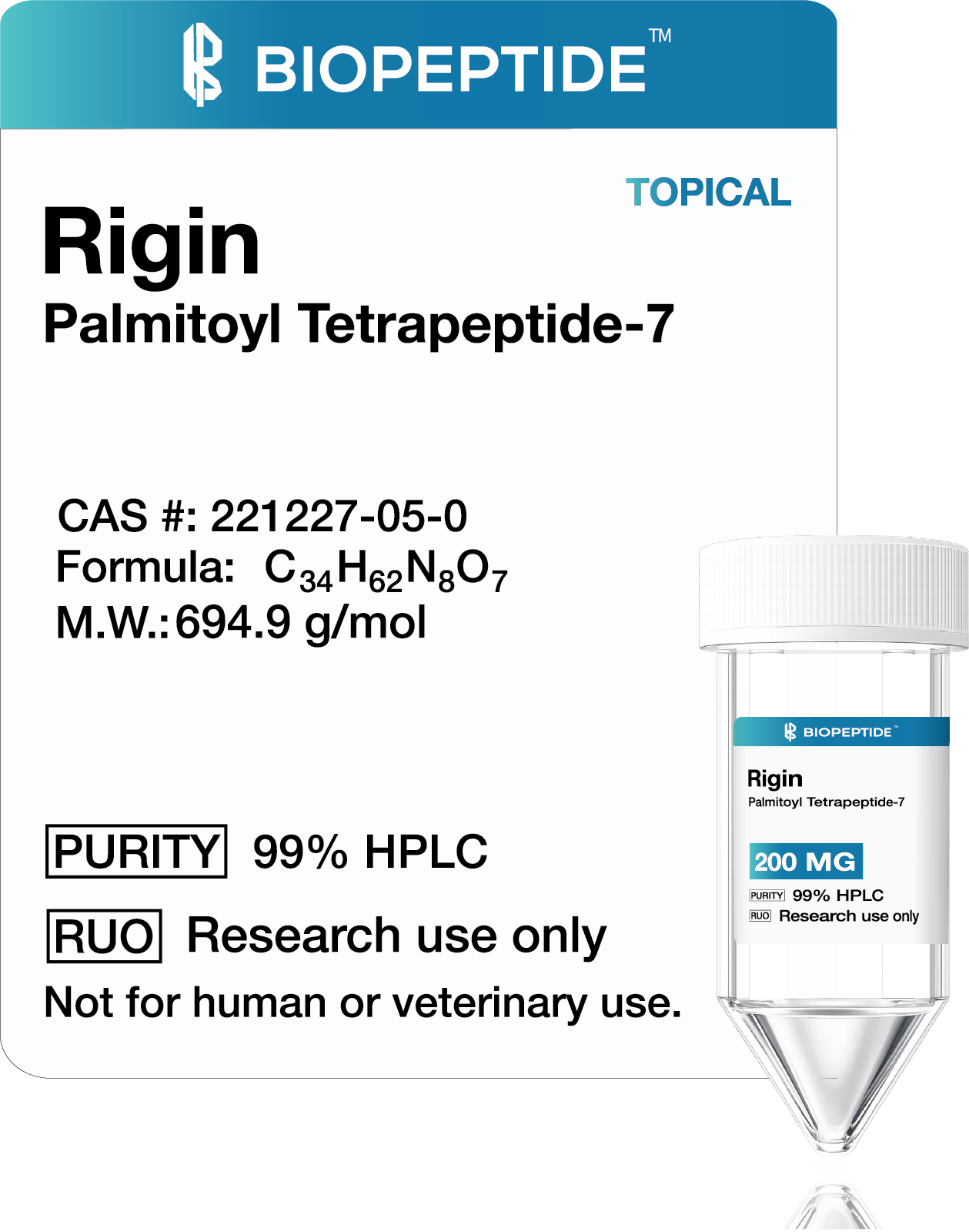
Rigin® (Palmitoyl Tetrapeptide-7) 200mg – Topical
CAS: 221227050
Rigin® (Palmitoyl Tetrapeptide-7) 200mg by BioPeptides is a high-purity lipid-conjugated tetrapeptide developed for advanced laboratory studies involving dermal signaling pathways, extracellular matrix communication, and peptide–lipid interaction models. Manufactured using precision peptide synthesis and analytically verified for stability and consistency, Rigin supports reproducible in-vitro research exploring membrane-associated peptide signaling systems.
$165.00
Research Use Only
Research Overview
Rigin is a synthetic signal peptide studied in laboratory research focused on dermal cellular communication and peptide-mediated signaling pathways.
Researchers investigate this lipid-modified tetrapeptide to understand how short peptide sequences interact with extracellular matrix systems.
The palmitoyl lipid group improves peptide stability and interaction with lipid environments in controlled research models.
Rigin contributes to broader peptide research programs exploring dermal signaling and extracellular matrix communication.
Scientific Background
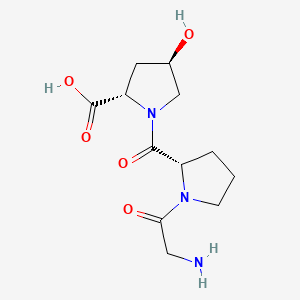
Palmitoyl Tetrapeptide-7 belongs to a class of lipid-conjugated peptides used in laboratory studies involving dermal signaling and matrix communication.
Lipidation of peptides enhances their stability and interaction with membrane-associated environments.
Researchers examine these peptides to understand how signaling molecules influence cellular communication in dermal models.
Such peptides are widely studied in cosmetic science, skin biology research, and extracellular matrix pathway investigations.
Mechanistic Research Perspective
- Dermal signaling pathway investigation
- Peptide–lipid membrane interaction studies
- Extracellular matrix communication analysis
- Peptide-mediated cellular signaling research
- Structure–function analysis of lipidated peptides
Primary Research Applications
Skin Biology Research: Rigin is used to investigate cellular communication pathways relevant to dermal and skin-associated laboratory models.
Extracellular Matrix Studies: Researchers analyze peptide signaling mechanisms associated with extracellular matrix communication systems.
Peptide–Cell Interaction Research: Applied in experiments examining how peptides interact with lipid membranes and receptor environments.
Cosmetic Science Research: Used in non-clinical formulation and stability research related to topical peptide systems.
In-Vitro Cellular Research: Suitable for controlled laboratory studies examining peptide-driven signaling responses.
Molecular Characteristics
- Compound Name: Rigin (Palmitoyl Tetrapeptide-7)
- CAS Number: 221227-05-0
- Peptide Class: Lipid-conjugated tetrapeptide
- Form: Topical research powder
- Unit Size: 200 mg research compound
Stability Profile and Storage Recommendations
- Store peptide at −20°C for long-term stability
- Protect from moisture and direct light
- Avoid repeated temperature fluctuations
- Handle using sterile laboratory techniques
- Seal container tightly after each use
Solubility and Preparation Considerations
- Compatible with lipid-based experimental systems
- Applicable in dermal signaling research assays
- Suitable for peptide-lipid interaction studies
- Compatible with cosmetic science formulation research
- Used in molecular and cellular biology protocols
Technical Specifications
product Name
Rigin (Palmitoyl Tetrapeptide-7) 200mg
brand
BioPeptides
purity
Research-grade analytical quality
form
Topical research powder
synthesis
Solid-phase peptide synthesis with lipid conjugation
analytical
Identity and purity verification
molecular Structure
Palmitoylated tetrapeptide signal peptide
stability
Stable under −20°C storage conditions
Analytical Validation and Quality Assurance
- Molecular identity verification
- Purity and stability assessment
- Structural integrity confirmation
- Batch-to-batch consistency testing
- Analytical quality control validation
Regulatory and Compliance Statement
Rigin supplied by BioPeptides is intended strictly for laboratory research use only. It is not approved for human consumption, veterinary use, therapeutic applications, or cosmetic treatments.
Frequently Asked Questions
Rigin is primarily used in laboratory studies focused on dermal signaling, extracellular matrix communication, and peptide-mediated cellular signaling pathways.
It refers to a tetrapeptide sequence chemically linked to a palmitoyl lipid chain, which improves peptide stability and membrane interaction in research models.
Yes. Rigin is widely studied in topical and surface-level in-vitro experiments examining peptide-cell interactions.
Rigin is studied in skin biology research, cosmetic science, peptide signaling research, and extracellular matrix studies.
Rigin should be stored at −20°C and protected from moisture and light.