
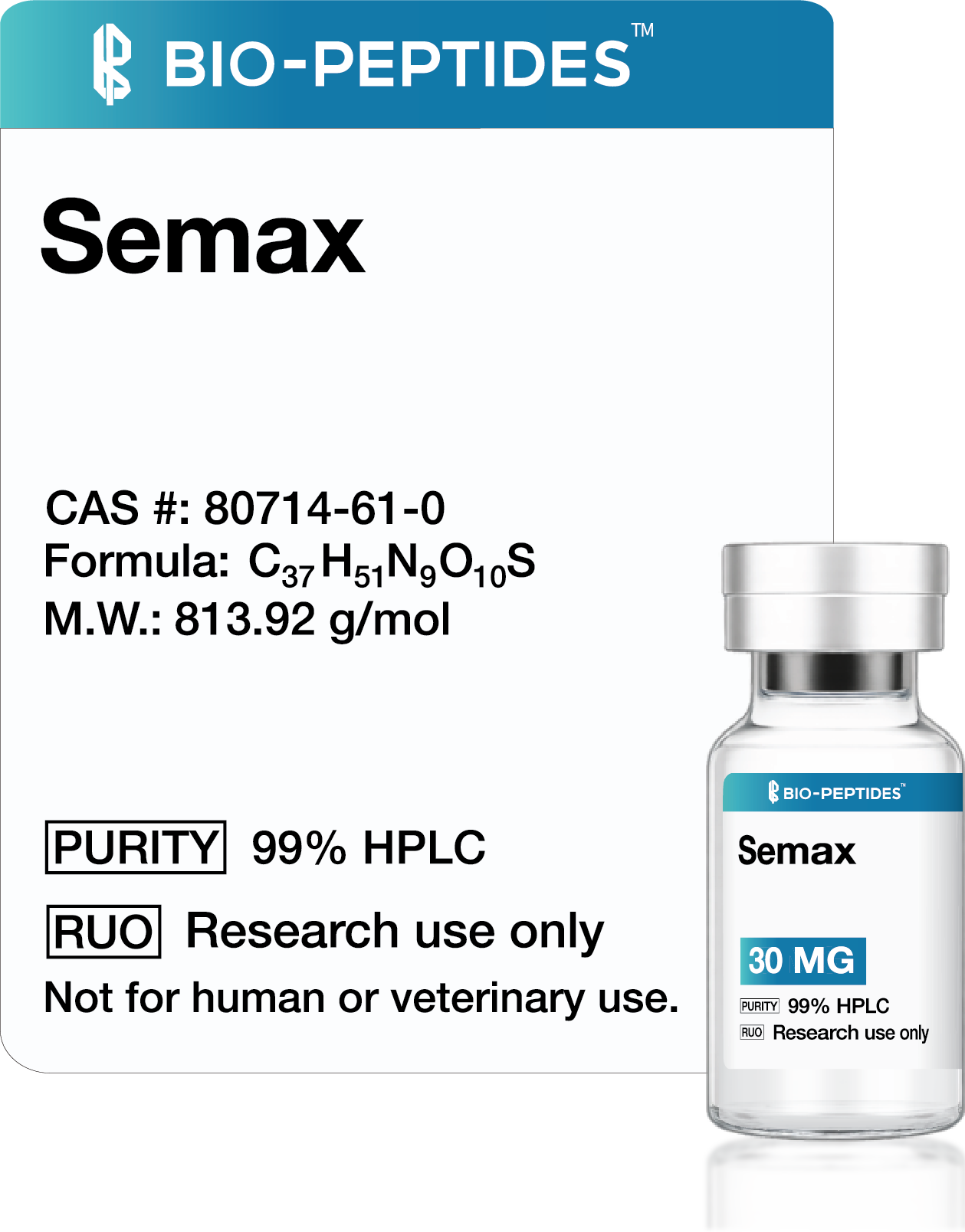
Semax 30mg
CAS: 80714610
Semax 30mg by BioPeptides is a high-purity synthetic neuroactive peptide developed for advanced laboratory investigations involving neuropeptide signaling, peptide-mediated neuromodulation, and central nervous system communication pathways. Manufactured using precision solid-phase peptide synthesis and analytically verified for purity and stability, Semax supports reproducible in-vitro research examining neural signaling dynamics and peptide-driven regulatory mechanisms.
$260.00
Research Use Only
Research Overview
Semax is a synthetic neuroactive peptide studied in laboratory environments for its role in neuropeptide signaling and central nervous system communication.
Researchers investigate Semax in experimental models examining peptide-mediated neuromodulation and neural signaling pathways.
The peptide is commonly incorporated into neuroscience research programs focused on regulatory peptides influencing neural communication.
Semax contributes to broader research investigating peptide-driven signaling networks within central nervous system models.
Scientific Background
Semax was developed as a synthetic peptide derived from ACTH fragment research to investigate regulatory neuropeptide signaling.
Short regulatory peptides such as Semax are studied for their ability to modulate neural signaling systems without directly mimicking classical neurotransmitters.
Researchers examine Semax for its potential interaction with receptor pathways and neural communication mechanisms.
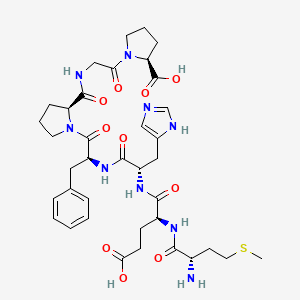
Its defined peptide structure enables structure-function investigations in molecular neuroscience research.

Mechanistic Research Perspective
- Neuropeptide signaling pathway investigation
- Central nervous system regulatory pathway studies
- Peptide-receptor interaction analysis
- Neural communication signaling research
- Structure-function analysis of ACTH-derived peptides
Primary Research Applications
Neuroregulatory Signaling Research: Semax is used to investigate peptide-mediated neuromodulation and signaling pathways within central nervous system research models.
Peptide-Receptor Interaction Studies: Researchers analyze ligand-receptor binding dynamics and signaling specificity in controlled laboratory experiments.
Molecular Neuroscience: Applied in in-vitro and exploratory preclinical models studying peptide-driven neural communication.
Cognitive Signaling Pathway Research: Used in laboratory research examining central signaling cascades associated with neural communication systems.
Comparative Neuropeptide Research: Supports comparative analysis between Semax and other neuroactive peptides under controlled research conditions.
Molecular Characteristics
- Compound Name: Semax
- CAS Number: 80714-61-0
- Peptide Class: Synthetic neuroregulatory peptide
- Form: Lyophilized peptide powder
- Unit Size: 30 mg research peptide
Stability Profile and Storage Recommendations
- Store lyophilized peptide at −20°C
- Protect from moisture and direct light exposure
- Avoid repeated freeze–thaw cycles
- Reconstitute using sterile laboratory-grade solvent
- Seal vial tightly after each use
Solubility and Preparation Considerations
- Soluble in sterile aqueous laboratory solutions
- Compatible with buffered peptide research systems
- Applicable in neuropeptide signaling assays
- Suitable for central nervous system pathway research
- Compatible with molecular neuroscience protocols
Technical Specifications
product Name
Semax 30mg
brand
BioPeptides
purity
Research-grade analytical quality
form
Lyophilized peptide powder
synthesis
Solid-phase peptide synthesis (SPPS)
analytical
Identity and purity verification
molecular Structure
Synthetic ACTH-derived neuroactive peptide
stability
Stable under −20°C storage conditions
Analytical Validation and Quality Assurance
- Molecular identity verification
- Purity and stability assessment
- Structural integrity testing
- Batch-to-batch consistency validation
- Analytical quality control inspection
Regulatory and Compliance Statement
Semax supplied by BioPeptides is intended strictly for laboratory research use only. It is not approved for human consumption, veterinary use, therapeutic applications, or medical treatments.
Frequently Asked Questions
Semax is primarily used in laboratory research investigating neuropeptide signaling and central nervous system regulatory pathways.
Semax is a regulatory peptide rather than a classical neurotransmitter, allowing researchers to study peptide-mediated neuromodulatory mechanisms.
Yes. Semax is commonly used in controlled in-vitro experiments analyzing peptide-receptor interactions and neural signaling responses.
Semax is studied in neuroscience research, peptide signaling studies, molecular biology, and neuropharmacology investigations.
The 30mg quantity supports extended laboratory experiments and provides efficient experimental workflows.
Semax should be stored at −20°C and protected from light and moisture.