
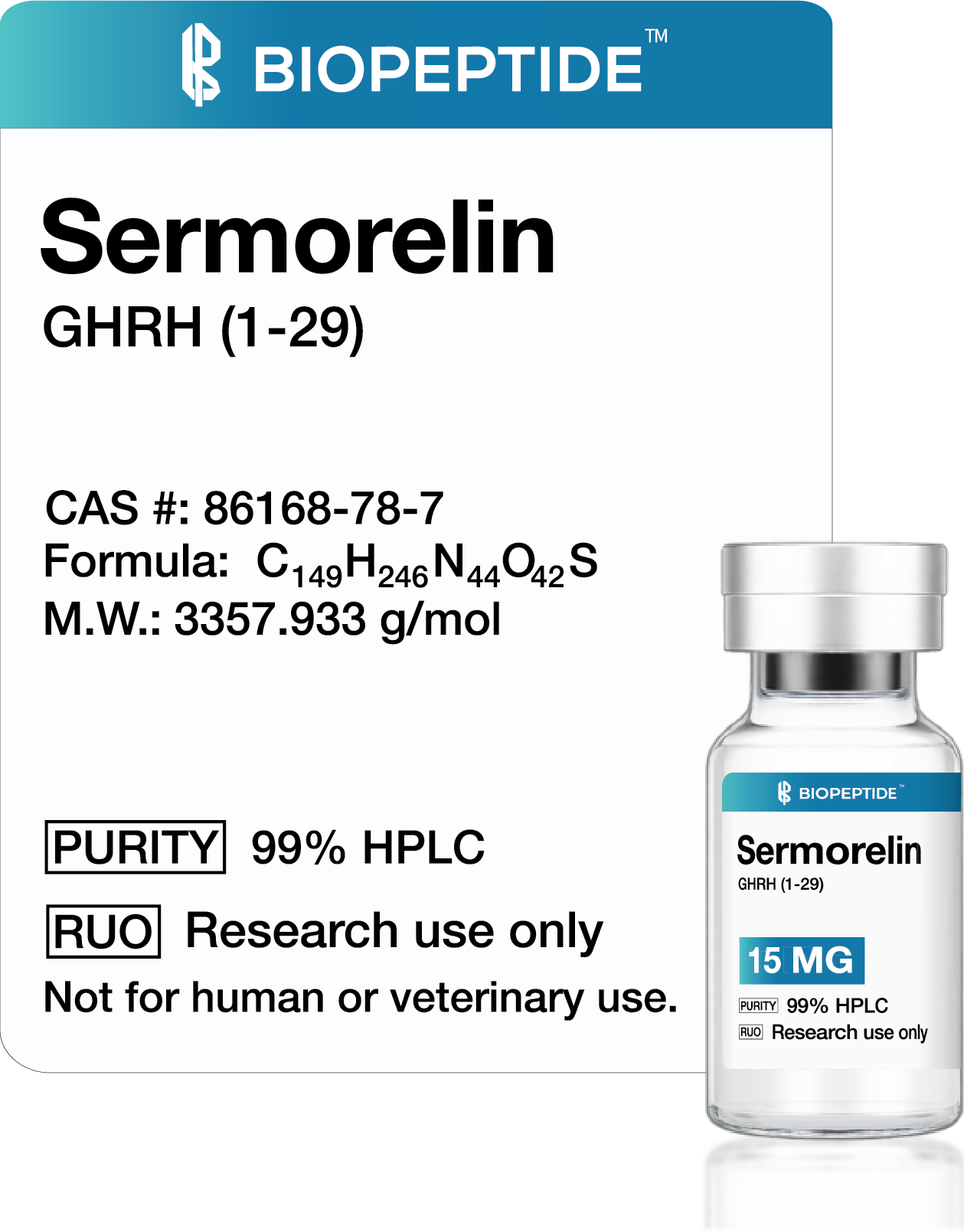
Sermorelin 15mg
CAS: 86168-78-7
Sermorelin 15mg by BioPeptides is a research-grade synthetic peptide representing the biologically active GHRH (1-29) fragment of growth hormone–releasing hormone. It is widely used in laboratory investigations examining growth hormone signaling pathways, endocrine regulation, and peptide–receptor activation mechanisms. Manufactured using precision peptide synthesis and validated through analytical testing, Sermorelin provides reproducible experimental performance for GH-axis research and pituitary signaling studies.
$115.00
Research Use Only
Research Overview
Sermorelin is a synthetic analog of growth hormone–releasing hormone corresponding to the biologically active GHRH (1-29) fragment.
In laboratory research environments, Sermorelin is studied for its role in activating GHRH receptors and initiating growth hormone signaling pathways.
Researchers investigate its function within pituitary signaling systems and endocrine communication networks.
The peptide supports mechanistic studies examining growth hormone secretion dynamics and peptide-driven intracellular signaling.
Scientific Background
Growth hormone secretion is regulated by hypothalamic peptides such as growth hormone–releasing hormone (GHRH).
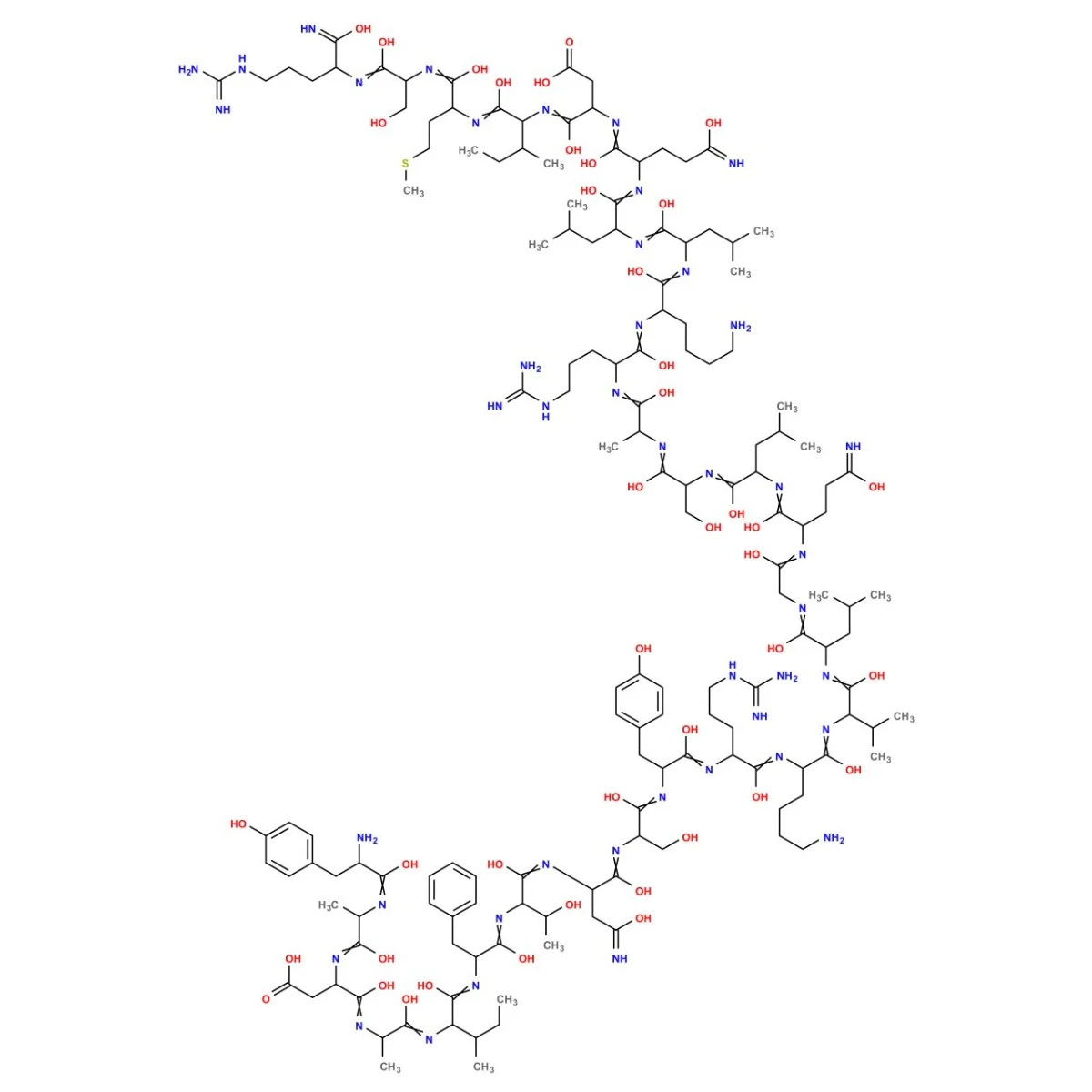
Sermorelin represents the first 29 amino acids of the native GHRH sequence, which contain the biologically active region responsible for receptor binding.
In experimental models, Sermorelin activates GHRH receptors located in the pituitary gland, initiating downstream signaling that regulates GH release.
This mechanism makes Sermorelin an important research tool for investigating endocrine signaling and hormonal regulation systems.
Mechanistic Research Perspective
- GHRH receptor activation research
- Growth hormone secretion pathway studies
- Endocrine regulatory signaling investigations
- Peptide–receptor interaction analysis
- Pituitary signaling pathway exploration
Primary Research Applications
Growth Hormone Signaling Research: Used to examine GH release mechanisms through activation of the GHRH receptor pathway.
Endocrine Pathway Studies: Researchers analyze hormonal feedback systems and endocrine communication pathways.
Peptide–Receptor Interaction Research: Applied in assays evaluating ligand binding, receptor activation, and intracellular signaling responses.
Molecular and Cellular Biology: Used in controlled in-vitro research studying peptide-driven cellular signaling and communication.
Comparative GH Peptide Research: Supports comparisons between Sermorelin and other GH-related peptides such as Mod-GRF.
Molecular Characteristics
- Compound Name: Sermorelin
- CAS Number: 86168-78-7
- Peptide Type: GHRH (1-29) analog
- Peptide Class: Growth hormone signaling peptide
- Form: Lyophilized peptide powder
- Unit Size: 15 mg research peptide
Stability Profile and Storage Recommendations
- Store lyophilized peptide at −20°C
- Protect from moisture and direct light exposure
- Avoid repeated freeze–thaw cycles
- Reconstitute using sterile laboratory-grade solvent
- Seal vial tightly after each use
Solubility and Preparation Considerations
- Soluble in sterile aqueous laboratory solutions
- Compatible with buffered peptide research systems
- Applicable in endocrine signaling assays
- Suitable for receptor signaling experiments
- Compatible with molecular biology research protocols
Technical Specifications
product Name
Sermorelin 15mg
brand
BioPeptides
purity
Research-grade analytical quality
form
Lyophilized peptide powder
synthesis
Solid-phase peptide synthesis (SPPS)
analytical
Identity and purity verification
molecular Structure
GHRH (1-29) peptide analog
stability
Stable under −20°C storage conditions
Analytical Validation and Quality Assurance
- Molecular identity verification
- Purity and stability assessment
- Structural integrity testing
- Batch-to-batch consistency validation
- Analytical quality control inspection
Regulatory and Compliance Statement
Sermorelin supplied by BioPeptides is intended strictly for laboratory research use only. It is not approved for human consumption, veterinary use, therapeutic applications, or medical treatments.
Frequently Asked Questions
Sermorelin 15mg is used in laboratory research to study growth hormone–releasing hormone signaling, GH secretion dynamics, and endocrine regulation mechanisms.
GHRH (1-29) refers to the biologically active portion of growth hormone–releasing hormone responsible for receptor binding and GH signaling.
CAS 86168-78-7 uniquely identifies Sermorelin and ensures accurate chemical documentation and reproducibility across laboratories.
Yes. Sermorelin is widely used in controlled laboratory experiments examining receptor activation and endocrine signaling pathways.
It is commonly studied in endocrinology research, peptide signaling studies, molecular biology, and growth hormone pathway investigations.
The 15mg format supports extended research programs and high-throughput experiments while reducing variability between experiments.
It should be stored at −20°C and protected from light and moisture.