

TB-500 (Thymosin Beta-4 Fragment) 5mg
CAS: 77591-33-4
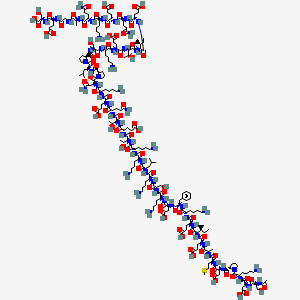
TB-500 (Thymosin Beta-4) is a synthetic research peptide developed for advanced laboratory investigations involving cell migration, cytoskeletal remodeling, actin regulation, and regenerative signaling pathways. The peptide corresponds to the 43-amino-acid structure of Thymosin Beta-4 and is widely studied in cellular and regenerative biology research models.
$165.00
Research Use Only
Research Overview
TB-500 is a synthetic analog of the naturally occurring peptide Thymosin Beta-4, studied extensively in laboratory research focused on cell migration and structural protein regulation.
The peptide plays a role in actin binding, a process involved in cytoskeletal organization and intracellular signaling pathways.
Researchers investigate TB-500 in experimental models examining regenerative signaling, tissue repair mechanisms, and cellular communication networks.
The 5mg research quantity supports focused experimental studies and controlled peptide analysis in laboratory environments.
Scientific Background
Thymosin Beta-4 is a naturally occurring 43-amino-acid peptide found in many biological tissues and associated with cellular motility and cytoskeletal regulation.
TB-500 represents a synthetic research analog designed to allow scientists to examine these mechanisms in controlled laboratory models.
Research studies frequently investigate TB-500 in relation to actin-binding dynamics and structural protein signaling pathways.
These experimental investigations contribute to broader scientific research involving regenerative biology, molecular signaling systems, and tissue repair pathways.
Mechanistic Research Perspective
- Cell migration signaling pathway studies
- Actin binding and cytoskeletal remodeling research
- Regenerative cellular signaling investigation
- Angiogenesis-related molecular pathway research
- Peptide-mediated tissue communication systems
Primary Research Applications
Cell Migration & Motility Research: Used in laboratory studies examining cellular movement and peptide-mediated migration signaling pathways.
Tissue Regeneration Research: Supports experimental models investigating cellular repair and regenerative signaling mechanisms.
Cytoskeletal Dynamics Studies: Applied in experiments analyzing actin regulation and intracellular structural organization.
Angiogenesis Pathway Research: Used in non-clinical studies exploring vascular signaling and endothelial cellular responses.
Comparative Regenerative Peptide Research: Allows comparison between TB-500, BPC-157, and other regenerative research peptides.
Molecular Characteristics
- Compound Name: TB-500 (Thymosin Beta-4)
- CAS Number: 77591-33-4
- Amino Acid Length: 43 aa
- Peptide Class: Regenerative research peptide
- Form: Lyophilized powder
- Research Quantity: 5 mg
Stability Profile and Storage Recommendations
- Store lyophilized peptide at −20°C
- Protect from light and moisture
- Avoid repeated freeze–thaw cycles
- Use sterile laboratory techniques during handling
- Maintain cold storage to preserve peptide stability
Handling and Research Preparation Considerations
- Typically reconstituted with sterile laboratory-grade solvent
- Suitable for in-vitro experimental research protocols
- Supports regenerative signaling and cytoskeletal research
- Applicable in molecular and cellular biology studies
- Designed for reproducible laboratory experimentation
Technical Specifications
product Name
TB-500 (Thymosin Beta-4) 5mg
brand
BioPeptides
purity
Research-grade analytical quality
form
Lyophilized peptide powder
synthesis
Solid-phase peptide synthesis (SPPS)
analytical
Identity and purity verification
molecular Structure
Synthetic 43-amino-acid peptide
stability
Stable when stored under recommended conditions
Analytical Validation and Quality Assurance
- Molecular identity confirmation
- Purity and stability testing
- Structural integrity verification
- Batch-to-batch consistency analysis
- Analytical quality control inspection
Regulatory and Compliance Statement
TB-500 supplied by BioPeptides is intended strictly for laboratory research use only. It is not approved for human consumption, veterinary use, therapeutic application, or medical treatment.
Frequently Asked Questions
TB-500 is used in laboratory research to study cell migration, cytoskeletal dynamics, angiogenesis signaling, and regenerative cellular pathways.
CAS 77591-33-4 uniquely identifies TB-500 (Thymosin Beta-4), ensuring accurate chemical documentation and traceability across research laboratories.
The 43-amino-acid sequence represents the full structure of Thymosin Beta-4 used in laboratory research models.
Yes. TB-500 is widely studied in controlled laboratory experiments examining cell motility and actin-binding signaling mechanisms.
TB-500 is commonly studied in regenerative biology, molecular biology, tissue engineering research, and cellular repair signaling investigations.
It should be stored at −20°C, protected from light and moisture.