
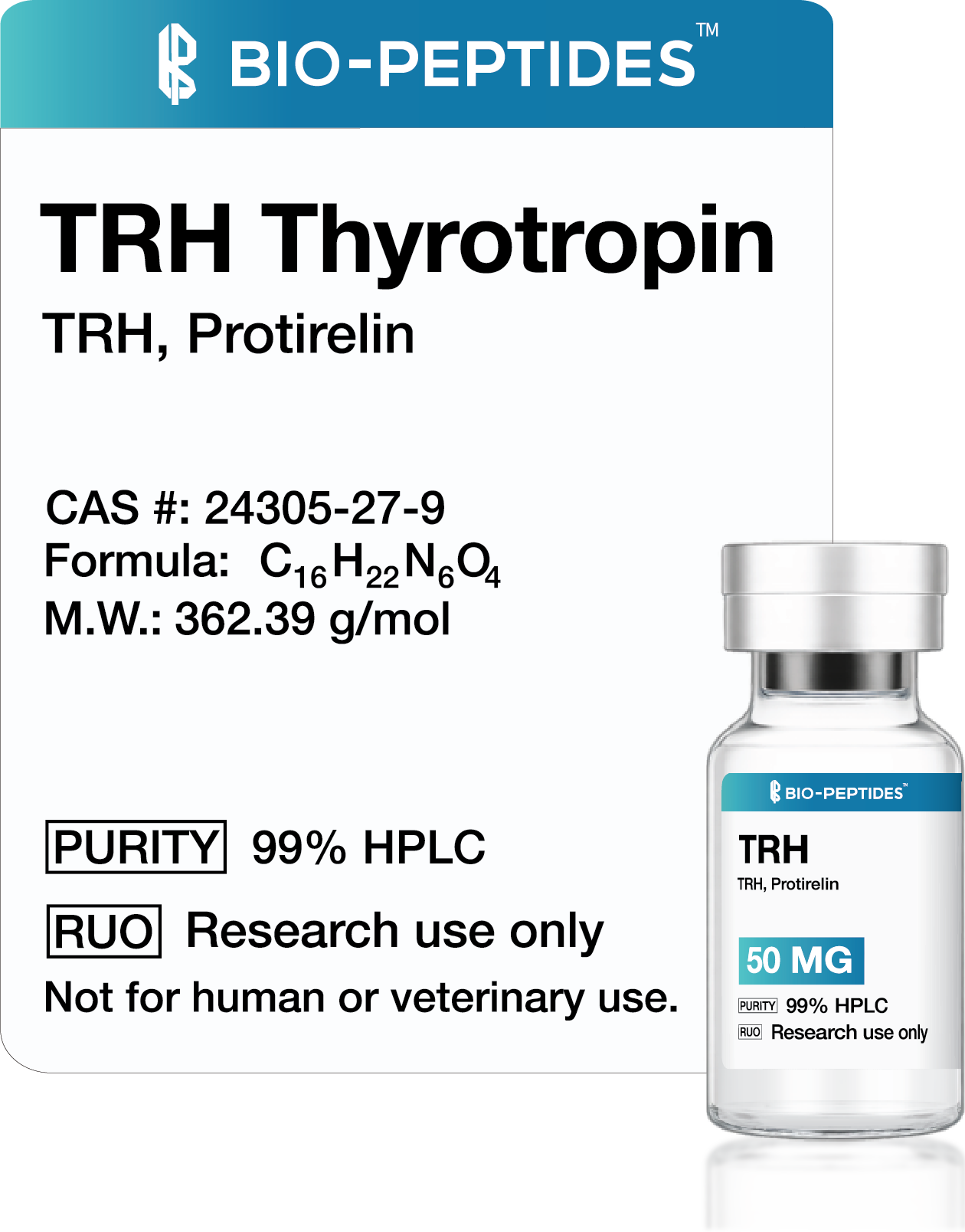
TRH (Thyrotropin / Protirelin) 50mg
CAS: 24305-27-9
TRH (Thyrotropin / Protirelin) 50mg is a synthetic tripeptide supplied for advanced laboratory research focused on hypothalamic–pituitary axis signaling pathways, neuroendocrine communication models, and peptide-mediated regulatory mechanisms.
$185.00
Research Use Only
Research Overview
Thyrotropin-Releasing Hormone (TRH) is a naturally occurring tripeptide that plays a key role in hypothalamic–pituitary signaling pathways.
Synthetic TRH is investigated in laboratory research for its influence on neuroendocrine communication models and peptide-mediated regulatory mechanisms within endocrine signaling networks.
This peptide is frequently included in neuroendocrine and hypothalamic–pituitary axis research programs studying endocrine feedback and regulatory communication.
Scientific Background
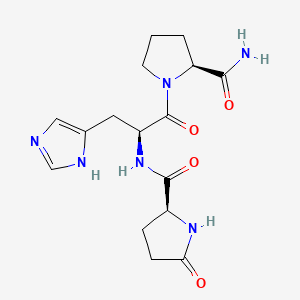
TRH is an important regulatory peptide involved in signaling between the hypothalamus and the pituitary gland.
In laboratory research, synthetic TRH is studied for its peptide–receptor interactions and role in endocrine signaling models involving thyroid and pituitary communication pathways.
Mechanistic Research Properties
- Interaction with TRH receptors in neuroendocrine signaling models
- Participation in hypothalamic–pituitary communication pathways
- Support of peptide-mediated endocrine feedback investigations
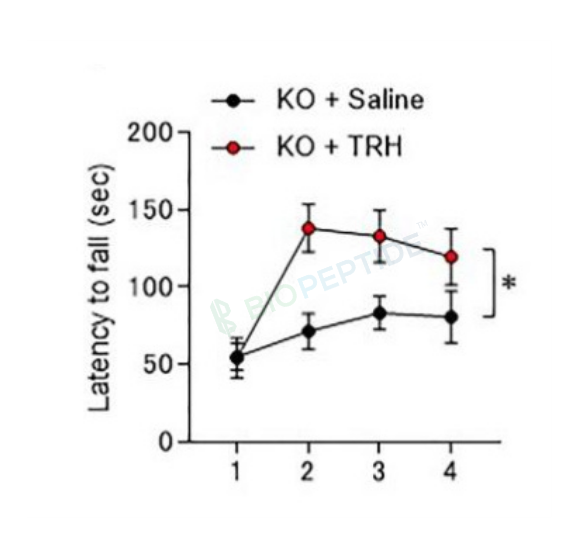
- Influence on central regulatory signaling systems
- Investigation of endocrine communication networks in laboratory models
Primary Research Applications
Neuroendocrine Signaling Research: Used in laboratory studies examining regulatory signaling pathways in neuroendocrine communication systems.
Hypothalamic–Pituitary Axis Research: Supports investigations into peptide-mediated signaling within hypothalamic and pituitary regulatory pathways.
Peptide–Receptor Interaction Studies: Applied in experimental models studying TRH receptor signaling behavior.
Endocrine Feedback Mechanism Models: Used to study hormonal feedback signaling in endocrine regulatory systems.
Central Regulatory Mechanism Research: Allows researchers to investigate regulatory communication pathways in central endocrine signaling models.
Molecular Characteristics
- Peptide Class: Synthetic tripeptide hormone analog
- Structure: Short-chain tripeptide
- Research Field: Neuroendocrine and endocrine signaling research
- Form: Lyophilized research peptide
Stability and Storage Profile
- Stable when stored lyophilized at −20°C
- Sensitive to moisture and prolonged light exposure
- Protect from environmental contamination
- Reconstituted solutions should be refrigerated
- Avoid repeated freeze–thaw cycles
Solubility and Reconstitution Options
- Bacteriostatic water
- Sterile saline solutions
- Buffered laboratory solvent systems
- Analytical solvents used in peptide research
Technical Specifications
product Name
TRH (Thyrotropin / Protirelin) 50mg
cas
24305-27-9
purity
≥98–99% (HPLC verified)
unit Size
50 mg
form
Lyophilized powder
synthesis
Solid-Phase Peptide Synthesis (SPPS)
analytical
HPLC, Mass Spectrometry
Analytical Validation and Quality Control
- HPLC purity verification
- Mass spectrometry identity confirmation
- Peptide structural integrity testing
- Batch consistency validation
- Laboratory quality control screening
Regulatory and Compliance Information
TRH (Thyrotropin / Protirelin) 50mg is supplied strictly for laboratory research and scientific investigation. It is not approved as a pharmaceutical product, dietary supplement, cosmetic ingredient, or medical product. The peptide is intended exclusively for controlled laboratory experimentation and analytical scientific use.
Why Source from Bio-Peptides?
Bio-Peptides supplies research-grade peptides to laboratories worldwide with a focus on analytical quality, batch consistency, and reliable scientific supply chains designed for advanced peptide research environments.
Frequently Asked Questions
TRH is used in laboratory research studying neuroendocrine signaling pathways and hypothalamic–pituitary communication models.
TRH is a synthetic tripeptide hormone analog related to thyrotropin-releasing hormone.
TRH is commonly studied in neuroendocrine research, endocrine signaling studies, and hypothalamic–pituitary axis investigations.
TRH should be stored at −20°C and protected from light and moisture.
No. This product is supplied strictly for laboratory research use.